


































































 After a 17-year hiatus following the Edmonton Oil Kings’ move to Billings, Montana in 1979, WHL hockey returned in 1996 as the Edmonton ICE became the newest tenants at the Northlands AgriCom. Dave Siciliano was named the team’s first head coach in January, following a successful run in the United States Hockey League as the head coach, and later the general manager, of the Thunder Bay Flyers. Siciliano parlayed four Anderson Cup regular-season titles, two Clark Cup playoff crowns and two Canadian Junior “A” Centennial Cup championships into a solid start in Edmonton, winning all of their first three games. John Kachur scored all three game-winners on the way to a team-best 82 points, but the team slipped back to .500 by the end of the season’s first month, and won just one game in a 23-game stretch before mid-December.
A 14-56-2 finish in 1996-97, an 0-9-1 start to the 1997-98 schedule, and 31 one-goal losses in that span spelled an early end to the Siciliano era in Edmonton, and assistant coach Ryan McGill would take over the reins in late October. The finish to the ’97-’98 season was only a slight improvement from the previous year, at 17-49-6. The stay in Edmonton was a brief one – after only two years in town, the team packed up and headed southwest to Cranbrook, British Columbia ahead of the 1998-99 season.
 After a rough two-year ride in Edmonton, the ICE departed for one of the WHL’s smallest markets in 1998. It was soon evident that big things were in store for the team, though – after winning a total of 31 games in their two seasons in Edmonton, the ICE won 30 games and made their first WHL playoff appearance in 1998-99. In fact, Edmonton nearly knocked out the eventual champion Calgary Hitmen before dropping a seven-game series.
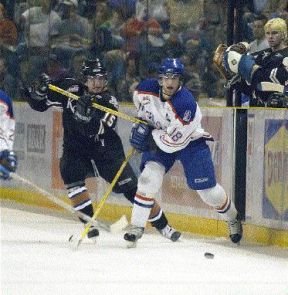 After winning the 2002 Memorial Cup, the ICE remained in the Western Conference for four more years before sliding over to the Central Division and the Eastern Conference in 2006. Though Kootenay was never able to earn another WHL title as a member of the B.C. Division, they never failed to stay competitive, picking up 92 points from Nigel Dawes and going 36-25-6-5 in their first season following their championship run.
 The ICE were nothing if not consistent in their new Eastern Conference digs, starting off with a bang in 2006-07 by finishing just three points shy of the Medicine Hat Tigers for a Central Division championship. Steve DaSilva finished two points shy of a league scoring title, but the Calgary Hitmen swooped in and upset the ICE with a seven-game first-round series victory. DaSilva had a 90-point showing the following season, as Kootenay finished in fourth place in the Central. The division standings were a true logjam, with the top four teams separated by just seven points. They would wipe out the Medicine Hat Tigers in a five-game first-round series, but Lethbridge won a five-game series to win its way into the conference final.
 A cursory look at the numbers behind the 2010-11 Kootenay ICE season don’t exactly show a dominant team bent on bringing championship hockey back to Cranbrook – that year, they finished third in another outstanding Central Division race, and never walked away with points in more than seven straight games. However, they simply couldn’t be caught in the postseason – a six-game opening-round get-together with Moose Jaw turned out to be their biggest challenge of the WHL playoffs. After going down two games to one in that opening round, Kootenay rattled off 11 straight wins, sweeping Saskatoon and Medicine Hat before moving on to the WHL Final. Portland sneaked out an overtime win, but that was all they managed in a five-game series.
 After winning an Ed Chynoweth Cup in 2011, the ICE were never able to recapture the magic during their final eight years in British Columbia. They would continue to make the playoffs, but regular-season success and playoff series wins would prove elusive – Kootenay made first-round playoff exits at the hands of the Edmonton Oil Kings back-to-back years in 2012 and 2013, winning only one game in those two series. Sam Reinhart and Jaedon Descheneau scored 105 and 98 points, respectively, to crank up the offense and push the ICE past the Calgary Hitmen in a six-game first-round playoff series, but that was as good as it got for the three-time champs.
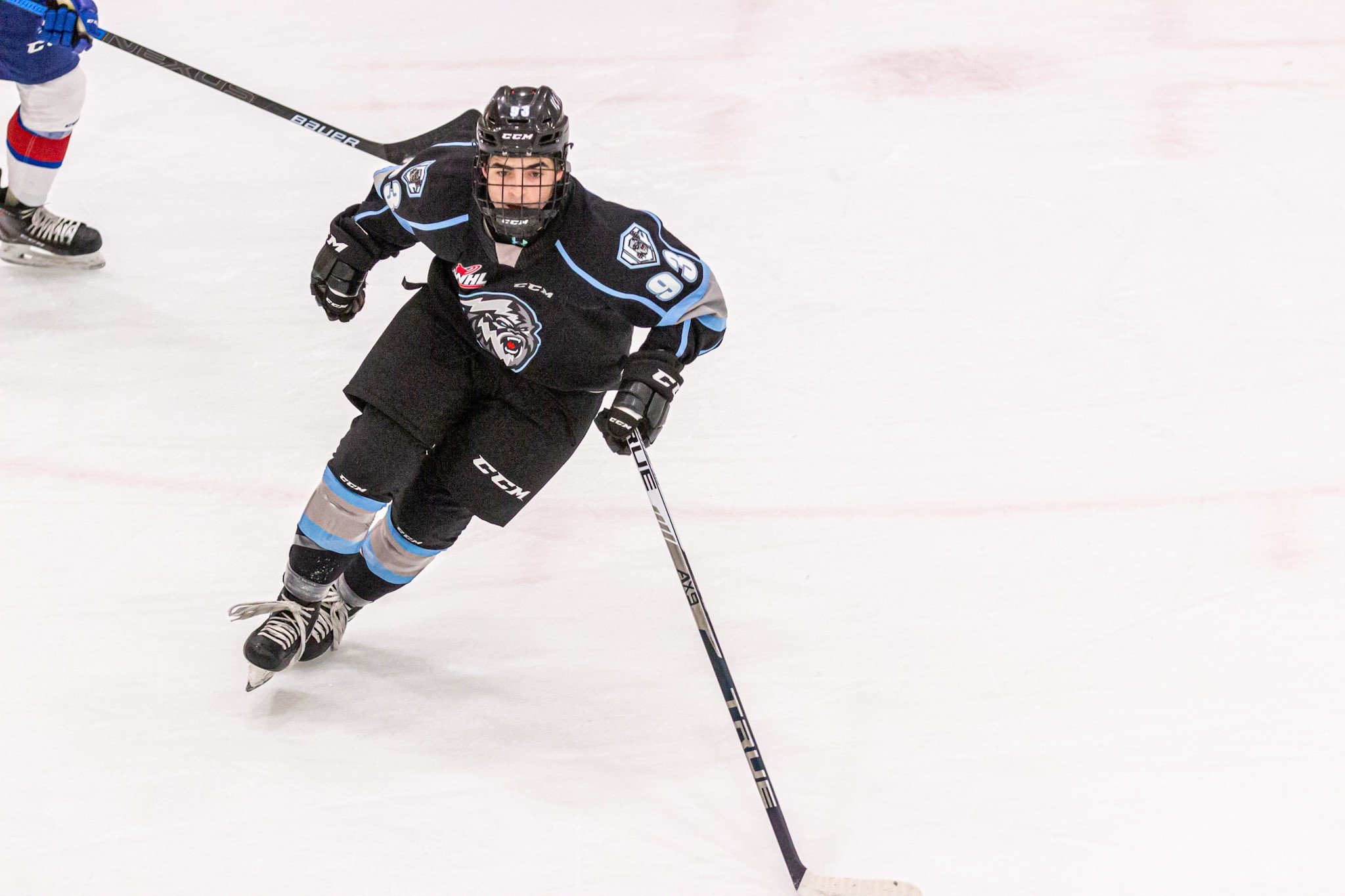 Upon the move to Winnipeg, the ICE once again made a run at the top of the Western Hockey League, and wondered “what might have been” after their first two seasons in their new city. Winnipeg was in playoff position and battling for home-ice advantage in the first round of the WHL playoffs when COVID struck, forcing the cancellation of the remainder of the season in mid-March. Liam Hughes was among the league’s top 10 goaltenders, while Isaac Johnson was also a presence on the WHL scoring leaderboard, posting 73 points with five games remaining. No playoffs were held during the league’s brief 2020-21 campaign either, as the Swift Current Broncos made a brief move to the East Division and each team played only 24 games. The ICE wrapped up the brief season with an 18-5-1 record, going second to Brandon in the division standings by just one point. Peyton Krebs outpaced the rest of the league with 43 points, while Connor McClennon and Owen Pederson also eclipsed the 30-point plateau. Gage Alexander went 6-3 with a 2.23 goals-against average to lead the way in net.