





































The Calm and Collected Kyle Pettit
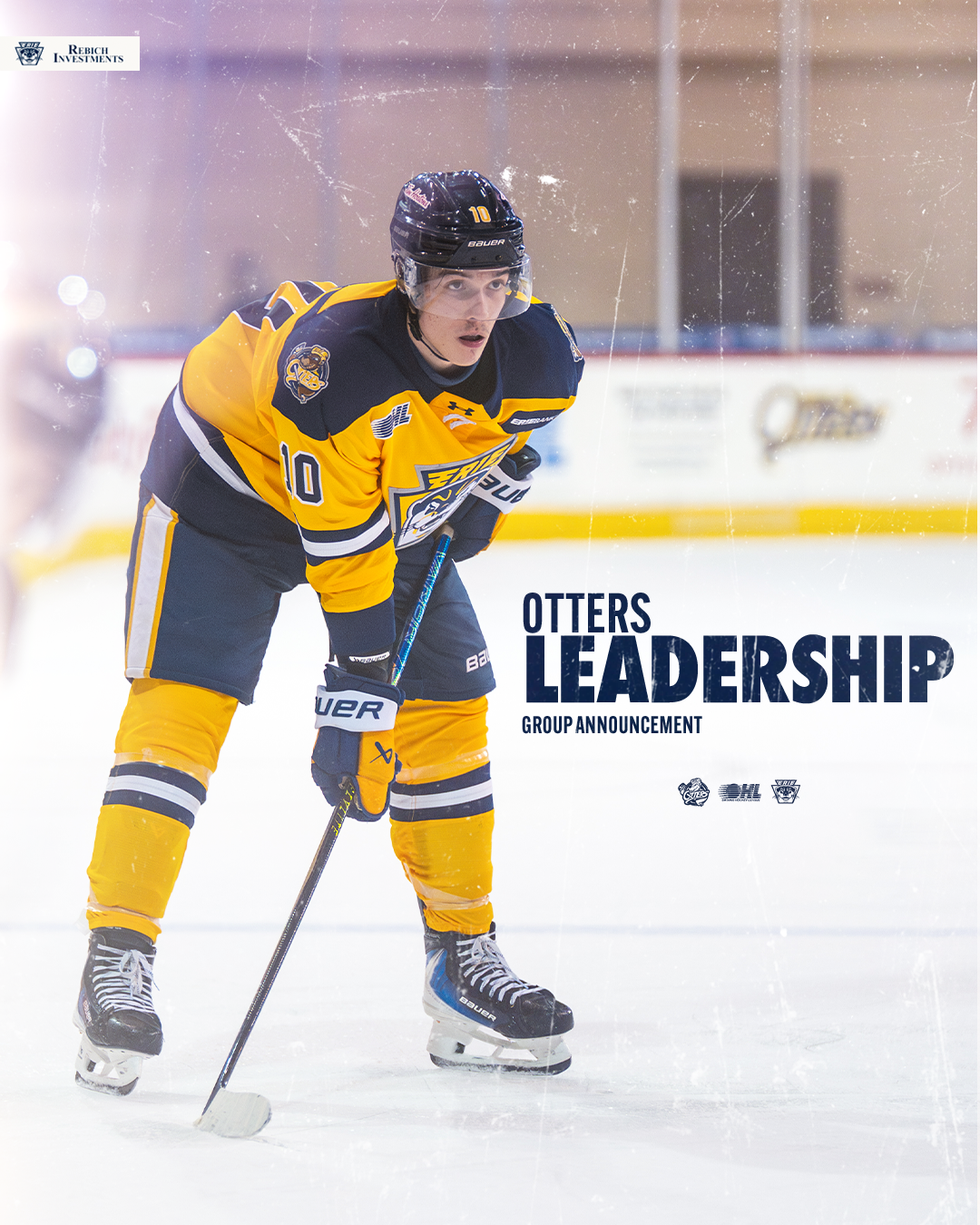
“Leadership wise, I’m more of a quiet person,” Otters veteran forward Kyle Pettit says, smiling, as one of his rowdier teammates makes faces at him just out of reach. “The past couple of years I’ve led by example. I’ve tried my best to lead in the room as well, but–like I said–I’m more of a quiet person.”
His boisterous teammate, unable to phase Pettit, finally gives up after one last poke with his stick and heads back onto the ice. Pettit gives a nervous laugh and shrugs, then continues unperturbed: “We’ve had a lot of successful seasons in the past couple years, so hopefully we build on that and carry that on into the start of the season.”
Pettit, a tall, lanky defensive centerman, knows something about leadership: he’s seen great players and great leaders come and go in his five years with Erie, and he knows what it’s like to have winning years and losing years. He entered the OHL in the 2012-13 season with Connor McDavid on an Otters team that, while certainly on their way to glory (they would have three straight fifty-win seasons in the years to come), struggled to execute in a highly competitive league. The next season, with Dylan Strome joining the team and goaltender Devin Williams leaping forward in his development, Erie won fifty-two games, making the playoffs and going all the way to the conference finals. They were defeated by Guelph in five games, but the learning experience was invaluable, says Pettit: “The one thing I’ve learned from playing in the playoffs and coming up short the past couple years is that the games get harder to win game-by-game. You can’t take any game lightly. Especially when you get down to the conference finals and finals, it just get’s harder and harder to win. For us, it’s just gonna be playing a full sixty minutes every game and giving it our best–giving it our all game in and game out.”
Connor McDavid, former Otters captain and now captain of the NHL’s Edmonton Oilers, Dylan Strome, and Devin Williams have since moved on to other opportunities and other teams, leaving Pettit as one of the longest-tenured players on an increasingly youthful Erie team. Despite–or perhaps because of–his quiet tendencies, he now has the responsibility of integrating young teenagers into one of the toughest junior leagues in North America. “You know, it’s always tough to make that first adjustment into the league,” he says. “For young guys it’s just feeling comfortable in the locker room. The younger guys will look up to the older guys a lot; I know I did my first season with Connor Brown and Adam Pelech. For [new players], I just hope they can look up to me and ask me any kind of questions without feeling nervous or anything, because [young] players feel best when they’re comfortable.”
Pettit was selected in the sixth round, 156 overall, by the Vancouver Canucks in 2014’s NHL Entry Draft. Vancouver elected not to sign him, however, and he returned to the Otters. He laughs again when I ask about his plans his OHL career concludes. “Oh, I don’t know,” he says, looking somewhat reluctant to think about anything other than this hockey season. “Obviously, we’re going to have to see how this season goes for me individually [ . . . ] If there was the chance to play in the AHL or ECHL–or even the NHL, you know, but probably not the NHL–if there was anything up like that I’d take my chance [playing professionally.] Hockey’s been a huge part of my life: sixteen years or so.”
“Both my parents are teachers, though, so [if I wasn’t playing hockey] I’d probably be doing something along those lines, like working with little kids.” His boisterous young teammate is back, banging his stick along the wall, trying to distract his friend from the interview. Pettit continues again, unflappable: “It’s just something that runs in my blood, being a teacher, so I think if there was anything else I’d be in teaching.”
In many ways, Pettit–like his parents–is a teacher already. Twenty years-old on a team comprised largely of teenagers, he has the experience, the quiet confidence, and the desire to guide his young Otters squad back into the playoffs. With the next generation of young talent eager to establish themselves in the league, a player like Pettit brings intangible qualities–responsibility, defensive intelligence, and the know-how earned through three deep runs in the playoffs–necessary for youthful teams to be successful in the OHL.
by Caleb McLaughlin