
































































Wheat Kings Adapting Quickly To New Neck Guards
Article Courtesy Perry Bergson, Brandon Sun
In the wake of a tragic death on the ice, a new era of safety dawned for the Brandon Wheat Kings on Thursday as the players wore neck guards for the first time in their Western Hockey League careers.
The league mandated the change, which begins today for all on-ice activities, following the death of 29-year-old American forward Adam Johnson of the Nottingham Panthers player last weekend.
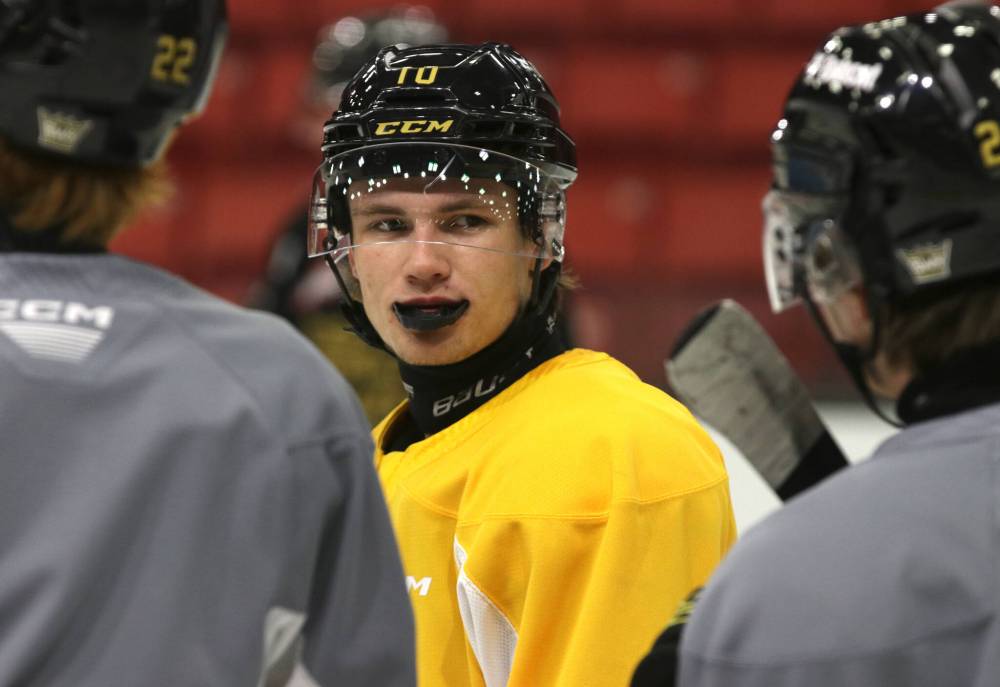
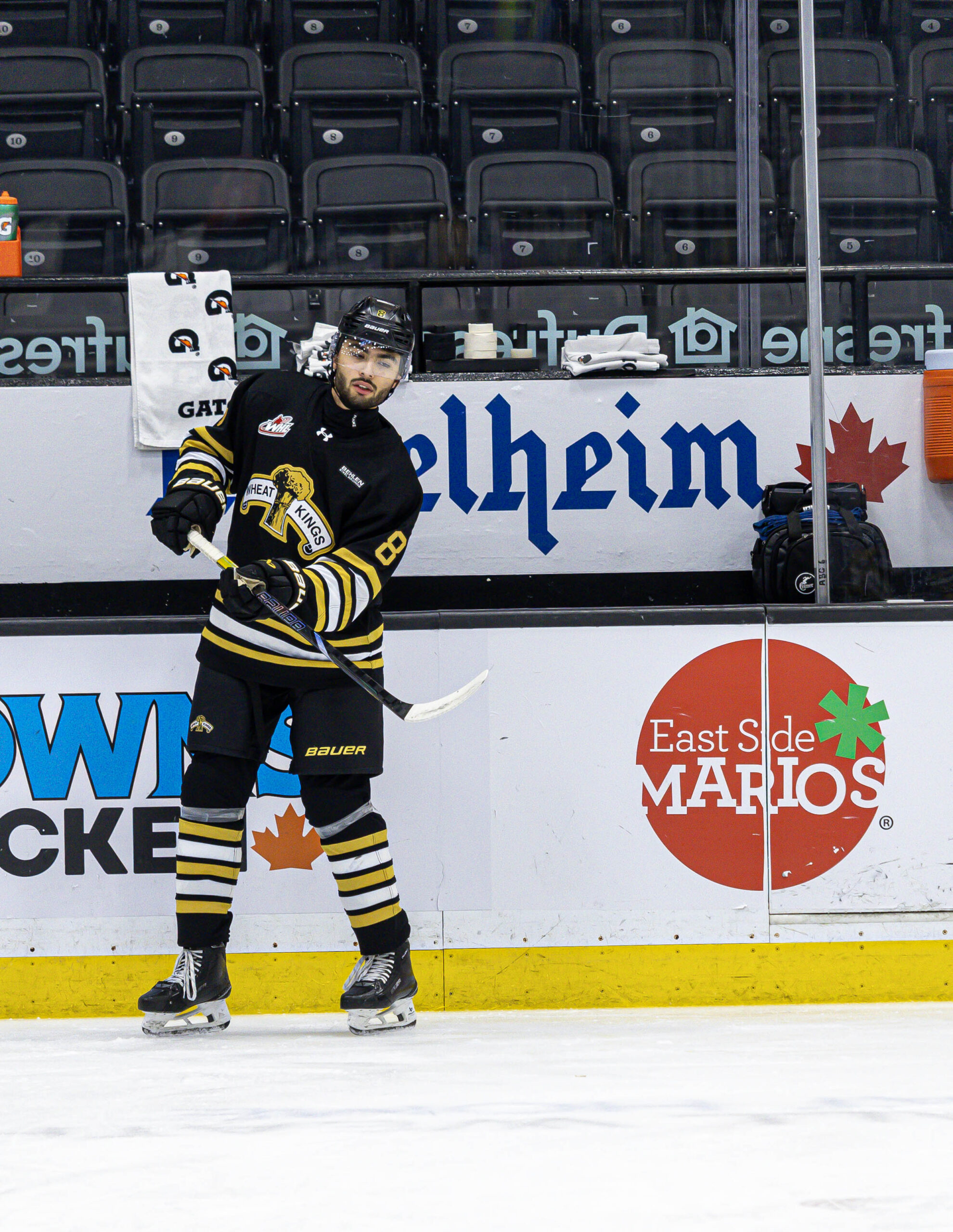
While it was a common sight at Wheat Kings practice at Westoba Place on Thursday afternoon to see players tugging at them between drills, they get why the extra level of protection is there.
Team captain Nate Danielson said they’re not the most comfortable piece of equipment but it make sense to wear them after Saturday’s tragedy.
“That’s a pretty scary thing,” Danielson said. “Everybody was pretty quick to say ‘Ya, I’ll wear it.’ You never want to see that happen to anyone. I think the chance of it ever happening to someone is worth being protected.”
Johnson, who briefly skated with the National Hockey League’s Pittsburgh Penguins, was struck on the throat by the skate of Sheffield Steelers forward Matt Petgrave during an Elite Ice Hockey League game on Saturday evening and died in hospital.
Defenceman Luke Shipley said it was a terrible thing to witness for players.
“I woke up and saw it all over social media and I couldn’t believe it,” Shipley said. “I looked it up and saw the video and was sick to my stomach. I couldn’t imagine what the team was going through on the ice and what his family is going through. It’s pretty horrible.”
Most players had to wear the neck protection until they got to the WHL. They have been the law of the land in the Ontario Hockey League and Quebec Major Junior Hockey League for a while, and are now mandated across the Canadian Hockey League.
Defenceman Andrei Maliavan brings an interesting perspective because he began his major junior career in the OHL. The first time he ever went without the protection, including his minor hockey career in Russia, was in the WHL.
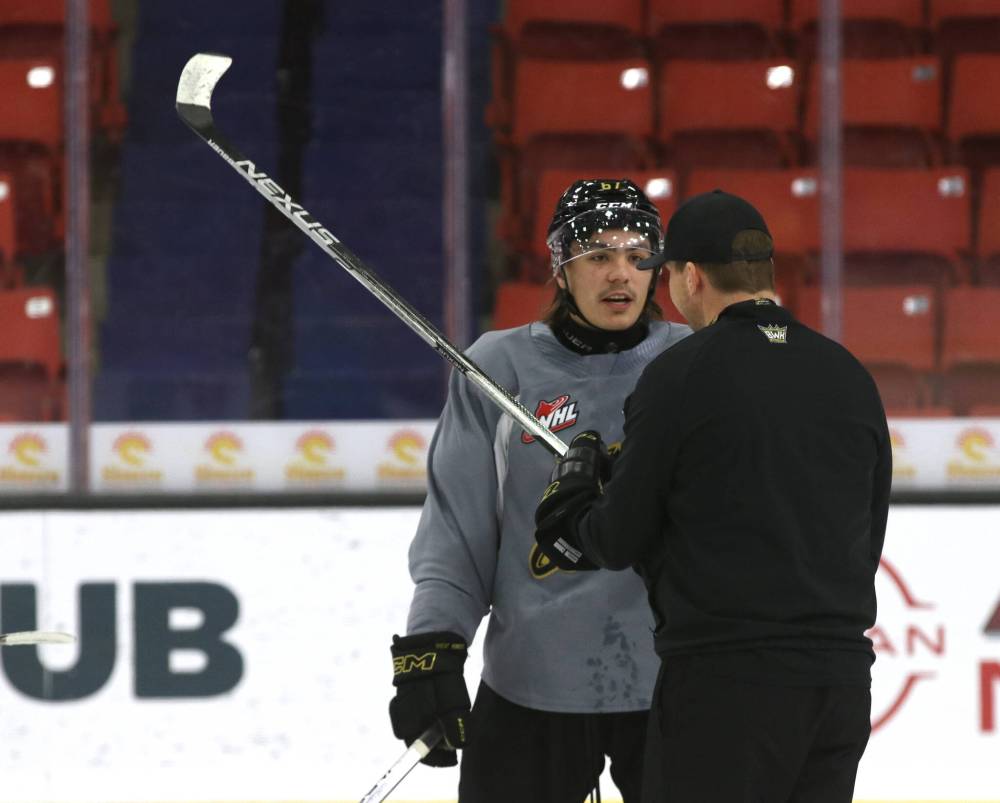
“I felt pretty comfortable,” Maliavan said. “With a neck guard it’s pretty hot and if you don’t wear them it feels cold. But with what happened a few days ago, we should wear them because it’s our health.”
Czech forward Dominik Petr also said the first time he ever played without one was in Brandon.
“It’s a big part of hockey in Europe, and also by IIHF rules,” Petr said. “It was my daily routine to wear a neck guard so it’s not a big problem for me.”
“Honestly, when I came here for the first practice, I was going to put it on and Scooter (equipment manager Scott Hlady) told me I didn’t have to. It feels better but it’s not a big problem to have it.”
Fourth-year forward Rylen Roersma admits they aren’t his favourite thing. In fact he was delighted when he didn’t have to wear one as a rookie in the Regina hub in the spring of 2021.
“I’ve always disliked them,” Roersma said. “They’re uncomfortable and I don’t like stuff on the back of my neck. It’s always been a battle with my parents. They were always stingy about me wearing them and they made me wear it through my whole minor hockey career. It was nice to get away from when I got here.”
But he has no regrets about putting it back on after Johnson’s death.

“It’s unacceptable for somebody to lose their life in the game of hockey,” Roersma said. “I think it’s really important that player safety takes priority.”
The product is either sold as a one-piece shirt or as a stand-alone guard, which players taped down onto their shirt to keep it in place.
Finding the neck guards was a bit of an issue — naturally, they’re in hot demand after Johnson’s death — but every player wore one at practice as they prepared for today’s game against the Pats at Regina’s Brandt Centre.
In fact, Shipley bought his own.
“It’s been good,” Shipley said. “I went and picked up a different one to be a little more comfortable. I spent my own money for my comfort but it’s been fine. I haven’t really noticed it.”
Brandon head coach and general manager Marty Murray noted every player has worn them in the past. Still, he said it made sense for the players to skate with them before they played tonight.
“I think it takes some time to get used to it,” Murray said. “I would imagine guys have worn them growing up so it’s something they’re a little bit familiar with. But once you get away from it, I guess it’s a little different. Once they got into practice, it’s probably one of those things you forget about.”
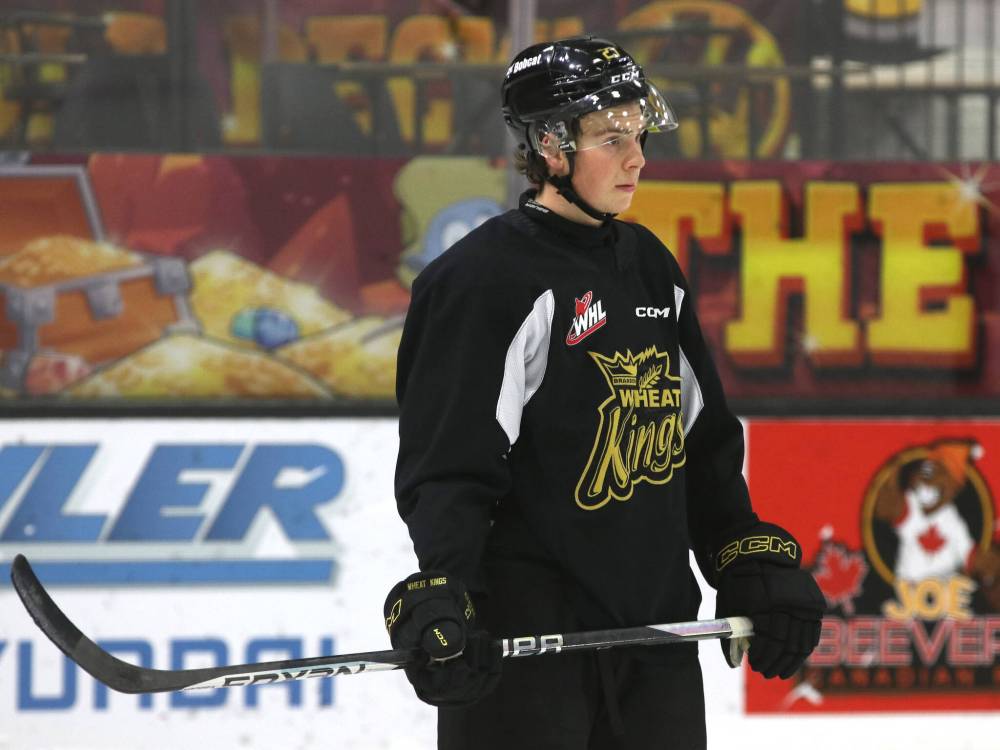
For Wheat Kings owner Jared Jacobson, it made complete sense. He has always insisted his son Jaxon, who is the team’s top prospect, wear one when he’s playing.
Jared Jacobson wore one himself through the under-18 level, discarding it for the first time when he graduated to the Manitoba Junior Hockey League.
“It’s not about the expected things that happen, it’s when the unexpected things happen,” Jacobson said. “It’s all about player safety and protecting the kids.”
The enduring challenge for the Wheat Kings might be dealing with the impact of seeing a player killed on the ice.
Wheat Kings tough guy Matt Henry admitted it shook him up.
“I just felt sick to my stomach,” Henry said. “That was somebody’s son and it can happen to any of us any time we’re on the ice. We’re on the ice six or seven times a week and obviously you don’t want to think about it, but it’s something you have in the back of your mind every time you step on the ice.”

Second-year forward Caleb Hadland agreed.
“It relates to what we do,” Hadland said. “Obviously it sucks and is something that could happen in a game. You realize that anything could happen at any time. It’s kind of scary but we’ll just make sure we’re protected out there and we’ll be good.”
As the players reflected on the tragedy, a common theme that developed was the fact it was a mundane play with a horrible outcome. That makes it even scarier.
“It was a freak accident and honestly, it could have happened to anybody in any league at any level of hockey,” Roersma said. “Everybody is pretty disrupted by the whole situation. My thoughts and prayers are with the Johnson family.”
Murray can’t remember ever seeing a throat or neck injury during his long playing career but he understands why the WHL has instituted the new rule. Even the possibility of it occurring is enough to be safe rather than sorry.
“You reflect on what happened in that situation and it’s obviously devastating,” Murray said. “It’s such a fast game, and you think about your players and my own kids, and the exposure unfortunately with the game of hockey and how fast it is.
“You just never know. For the league to take a precaution, I think is a good stance. I think everybody in the hockey world understands this is the way we need to go.”