


























































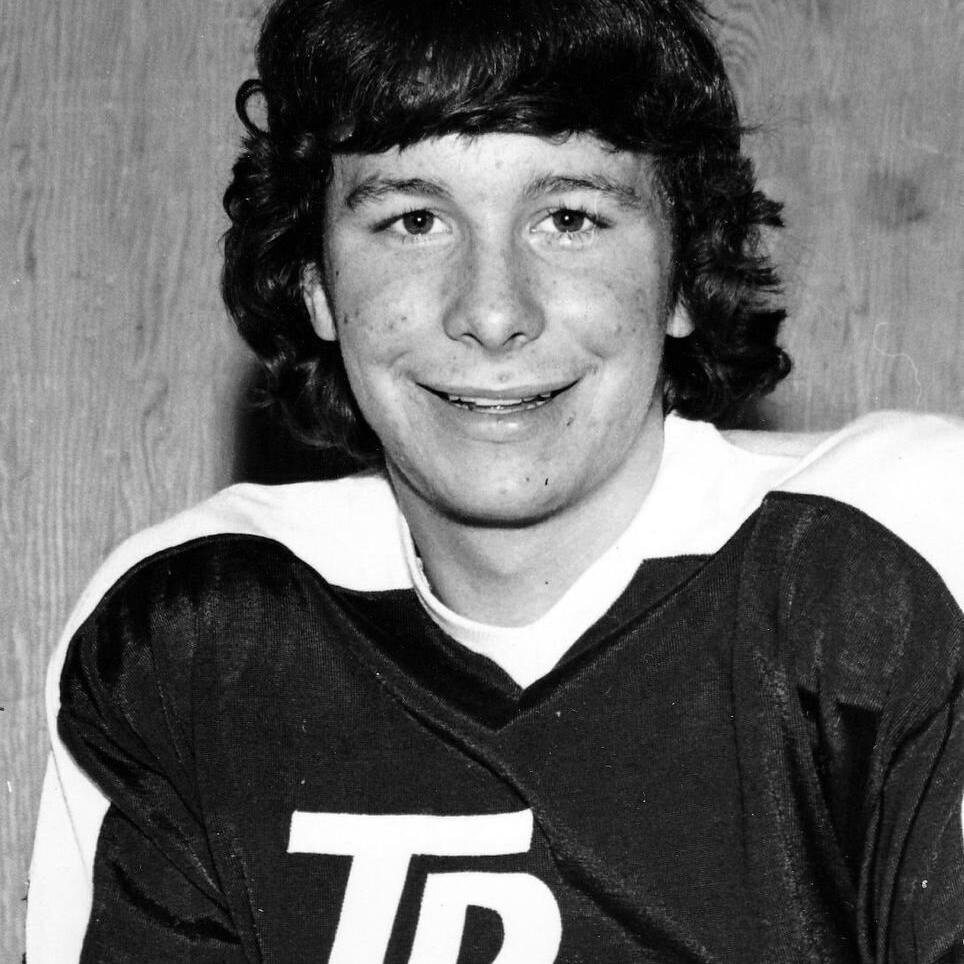
Paul McIntosh: A Lifetime in the Rink
By: Sophia Favit
Paul McIntosh spent most of his childhood on the hockey rink, and his routine from early January to late March was a testament to his dedication. His routine was as follows: wake up at 5 am, head to the rink, there he would join the ten or twenty other neighborhood kids who showed up. They would all take turns flooding the ice. The tiny shed where they played had been dubbed ‘The Ice Palace.’
“We’d throw six in the middle and throw the rest on each end,” McIntosh reminisces. At the end of the day, the losing team was tasked with scraping the ice. He practically lived there during those winter months.
In 1971, at the age of 17, Paul McIntosh was drafted by the Peterborough Petes after honing his skills in tier 2 hockey in Guelph. He fondly credits the maroon and white Petes with providing him with “three of the best years of my life.”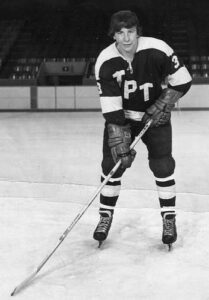
During his years with the team, McIntosh made a mark, amassing 96 points in 154 games and collecting 259 penalty minutes. Representing Canada at the 1973 World Junior Tournament, he returned home with a bronze medal and an impressive tally of 5 points in 5 games.
McIntosh vividly remembers the moment he learned the Petes would be representing Canada in Russia. “Back in 1973, as you know, there were no cell phones or social media. If you wanted to get hold of somebody, it might take a week'” he says. He recalls driving to work in his “old beat-up car” when he heard the exciting announcement.
“I almost went off the road,” he says laughing, “I heard the news on the Kitchener radio station.”
The training schedule for the tournament was far more rigorous than what he was used to at The Ice Palace. “We practiced twice a day, at 6 in the morning. If we missed school, [Roger Neilson] would almost kill us. You couldn’t miss school. Then, we practiced every day after school when we didn’t have a game.”
Three or four times a week, after grueling practices, Coach Neilson had the team run different routes. “It was obscene how good shape we were in,” McIntosh reminisces. After playing nearly half a game, he remembers he “wasn’t even tired, I could have played another game.”
After being drafted 65th overall by the Buffalo Sabres, McIntosh enjoyed a six-year professional hockey career. Following his playing days, he transitioned into coaching, becoming the head coach of the London Knights Hockey Club of the OHL.
“I was like everyone else; I wanted to stay in hockey.” Coincidentally, at 26 years old, McIntosh’s wife heard on the radio that the Knights were accepting resumes for the head coach position. “I had never coached a day in my life, but I went for the interview and ended up getting the job.”
Paul coached in London for three years. “Like a lot of good coaches, I got fired.”
Undeterred, he moved into scouting, spending nine years with the Vancouver Canucks and three years with the Calgary Flames. An opportunity with the London Knights arose again, this time as the General Manager, and he successfully secured the position. His tenure as GM of the Knights lasted five years.
In 2000, the franchise changed ownership, leading McIntosh to consider new opportunities. “I started looking around, and the first person I called was Bob Gainey because we played together in Peterborough. He was the general manager of the Dallas Stars at the time, and I lucked out because they were looking for a pro scout to attend NHL and AHL games.”
Today, Paul McIntosh is in his 23rd year as a pro scout for the Dallas Stars. “It’s incredible; they’re paying me to watch hockey games.” His schedule is relentless once the season starts, attending approximately 23 games a month.
Although he’s spent the majority of his life immersed in the world of hockey, it’s evident that McIntosh’s passion for the game remains undiminished. “I’m really lucky because I’ve worked for around five general managers and seven coaches. I’m very fortunate to do something I love.”