



















































Guelph Pride
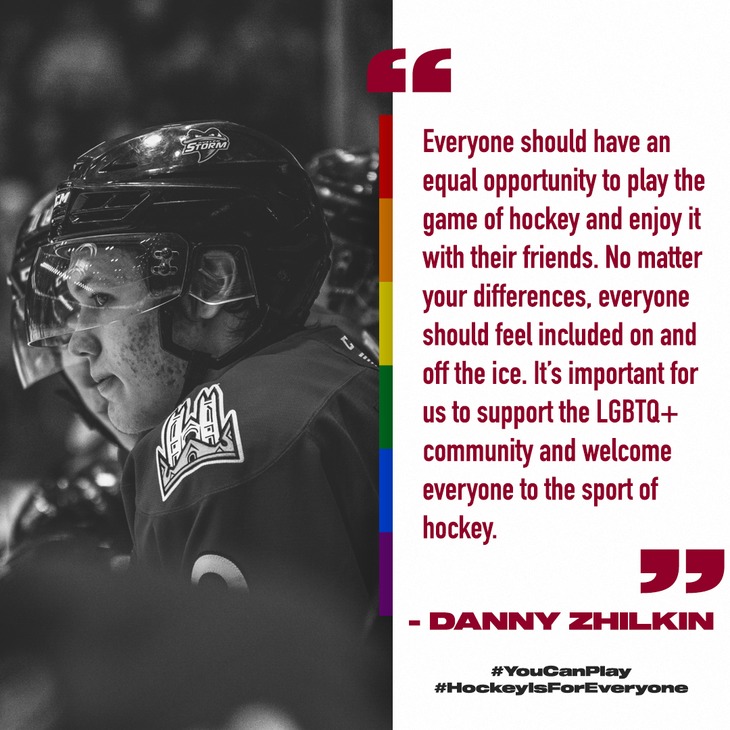
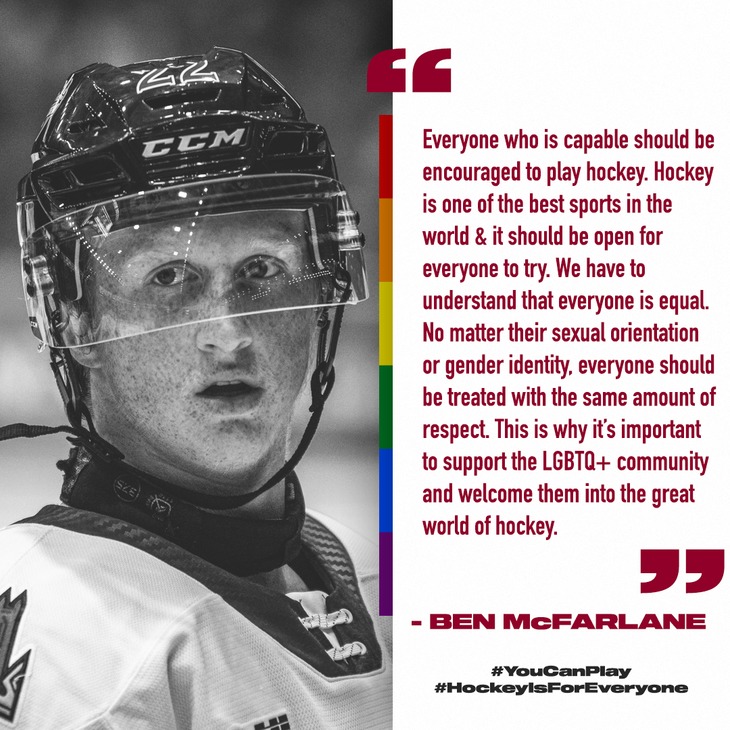
Today and every day, the Guelph Storm stand with all members of the LGBTQ+ community. We believe that hockey environments free of judgement and discrimination based on sexual orientation, gender identity, gender expression and/or race is crucial to keeping people safe, growing the game, and protecting the business of the sport.
Acknowledging that teamwork, acceptance and respect are some of the most basic values of our game, it’s our goal to work with our partners to evolve locker room and spectator culture, consult on inclusion policies, build stronger fan engagement and increase participation in hockey among LGBTQ+ youth.
Becoming a true LGBTQ+ ally takes compassion, time, thought, understanding and action. There are so many things to learn about the LGBTQ+ community that it can feel a little overwhelming and a bit confusing at first—BUT that’s ok!
Through advocacy, discussion and education, join the Guelph Storm in our fight for fairness in the locker room and on the ice.
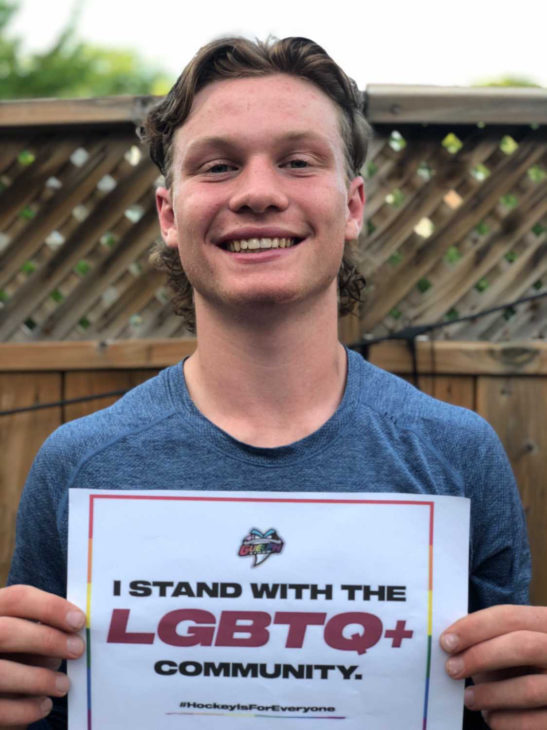
Luka Profaca
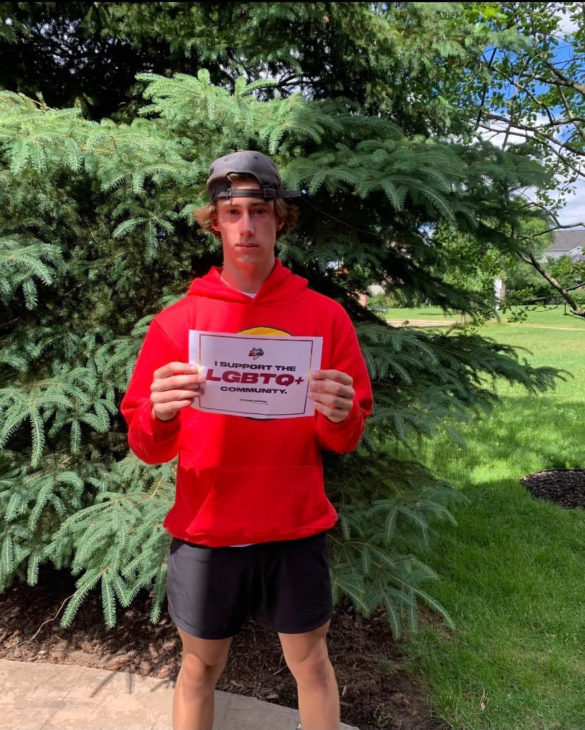
Jake Karabela
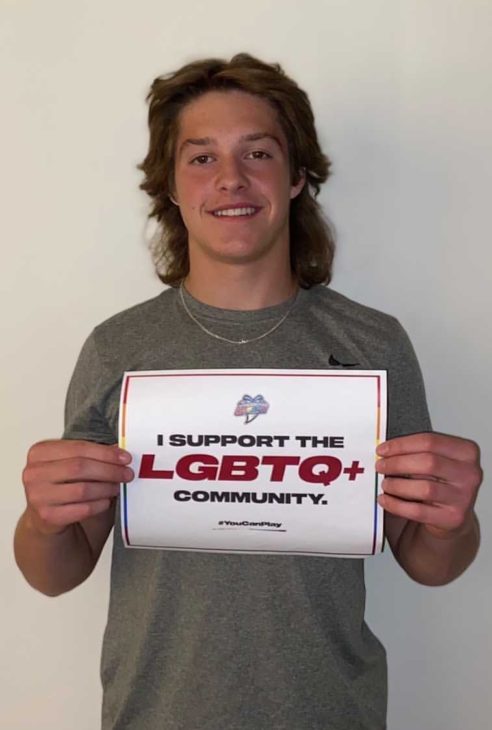
Cam Allen
First and foremost, we’d like to thank our fans and players who’ve taken the time to educate themselves about the LGBTQ+ community with us over the month of June. We acknowledge that LGBTQ+ allyship is not something that happens over night, but instead is an ongoing commitment to challenge homophobic language and behaviour we encounter.
Our commitment to LGBTQ+ inclusivity goes beyond June so we’re looking forward to working with Guelph Pride and Out on the Shelf to continue growing the great game of hockey. Inclusion in sports is important and it’s going to take all of us coming together to build a truly inclusive world where no one is left behind because of their age, disability, ethnicity, gender identity, sexual orientation or religion.
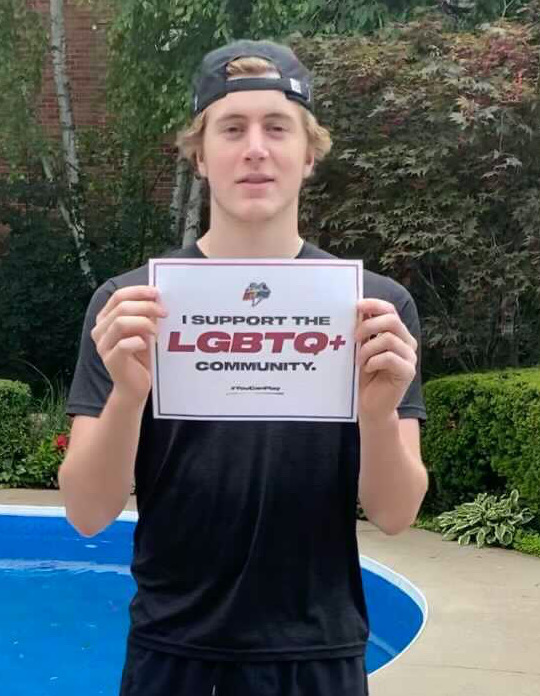
Braeden Bowman
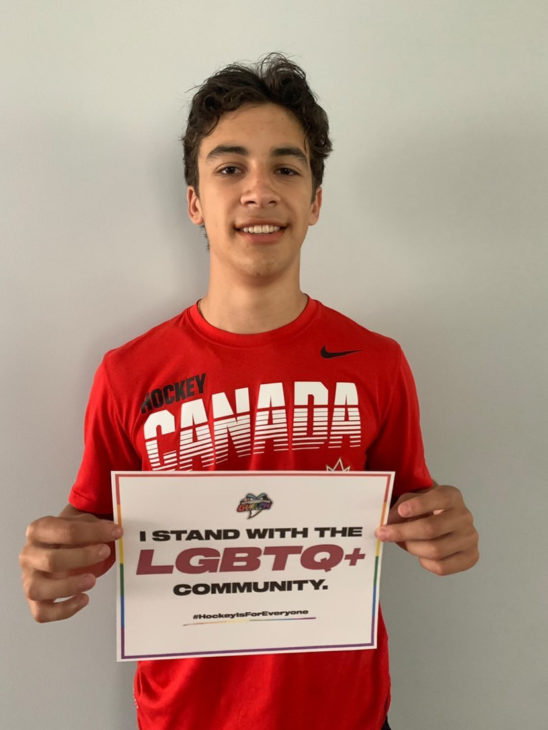
Matthew Poitras
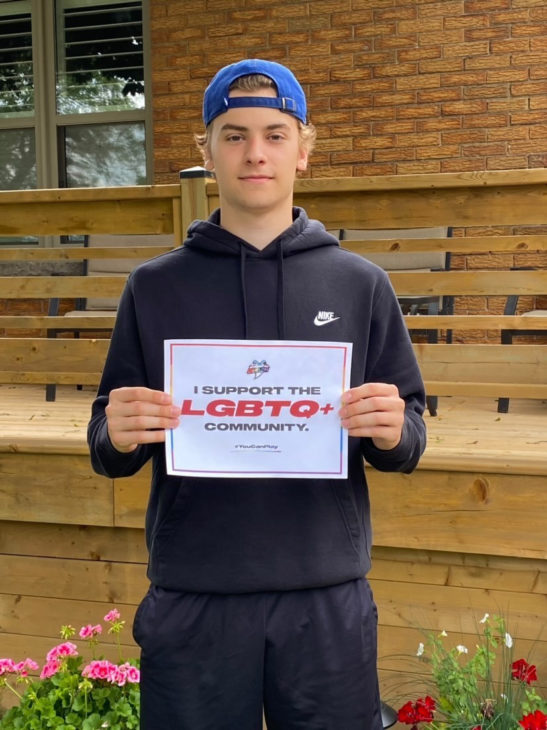
Jacob Maillet
Recap of what we have learned over Pride Month 2021
I. What is Pride month?
Lesbian, Gay, Bisexual, Transgender and Queer (LGBTQ) Pride Month is celebrated each year in the month of June to raise awareness of, and combat prejudice against LGBTQ+ identifying folks, uplift LGBTQ+ voices, and celebrate LGBTQ+ activism and culture.
Traditionally and internationally, Pride takes place in the form of parades, performances, or protests. It is part political activism and part celebration of all the LGBTQ+ community has achieved over the years.
Pride events welcome individuals from outside the LGBTQ+ community as it’s an opportunity to show support, observe, listen and be educated.
II. Terminology
Ally: A person who actively works to challenge heterosexism, sexism, homophobia, biphobia, and transphobia in themselves and others because they want to make the world a safer and more accepting space for all.
Agender/Genderless/Gender Neutral: A gender identity referring to someone who has no (or very little) connection to gender, no personal alignment with the concepts of either man or woman, and/or someone who sees themselves as existing without gender.
Gender: A state of being a man, a woman, both, neither, somewhere in between or something entirely different (Mardell, 2017).
Non-Binary: A gender identity that embraces a full universe of expressions and ways of being that resonate with an individual. It’s an umbrella term for individuals who don’t identify with the gender binary (the concept that there are only two genders). This term can be used to describe people who identify as agender, bigender, genderqueer, gender-fluid, etc.
Questioning: A period where a person explores their own sexual and/or gender identity, reflecting on such things as upbringing, expectations from others, and inner landscape. The individual may not be certain if they are gay, lesbian, bisexual, or trans and may be trying to figure out how to identify themselves.
- Click here for complete terminology list
III. Pronouns: What are they and why they are important.
Respect starts with inclusive language. Pronouns are important because language, whether written or verbal, can have a profound impact on individuals and communities. As individuals we convey our respect and help others to recognize who we are referencing when we accurately use a person’s pronouns to refer to them.
You may be familiar with the pronouns he/him/his and she/her/hers, and even they/them/theirs. However, people may use a combination of these pronouns, or other pronouns that are not included here.
Examples of pronouns:
- She/Her
- He/Him
- They/Them
- She/They
- She/They/He
- He/They
- Xe/Xie
- Ze/Zir
What exactly do She/They and He/They pronouns mean?
People that use these pronouns are comfortable with individuals using both she and they, or he and they pronouns when speaking about or to them.
How do I find out someone’s pronouns?
Never be afraid to directly ask “what pronouns do you use” because it’s best to avoid making assumptions about what someone’s pronouns are based on how they might present. It’s also becoming more common for people to add their pronouns in their social media handles and profiles, so consider giving their Instagram or LinkedIn a peak.
What if I accidently use the wrong pronoun for someone?
It’s important to remember that mistakes happen and it’s totally normal for you to mess up while you’re getting used to something new. But ensure that you keep these things in mind:
- Make sure that you apologize and correct yourself. For example: “Adam said he…sorry, they prefer hockey over soccer.”
- Don’t make a big fuss out of it—Keep your apology short and simple so you refrain from putting the pressure on the individual to reassure you.
- If someone corrects you before you realize, a lot of the time that person would prefer you thank them (and move on) rather than apologizing. Sometimes apologies can make them feel that they need to reassure the other person whereas a thank you shows them appreciation.
Tips on how to use language appropriately:
- Say “all genders” instead of “both genders” and “opposite sexes” as these terms imply that there are only two genders.
- Say “everyone, folks, ya’ll” instead of “ladies and gentlemen” to move away from traditional binary language that’s not as inclusive.
- Say “they” not “it” when referring to someone whose pronouns you may be unsure of.
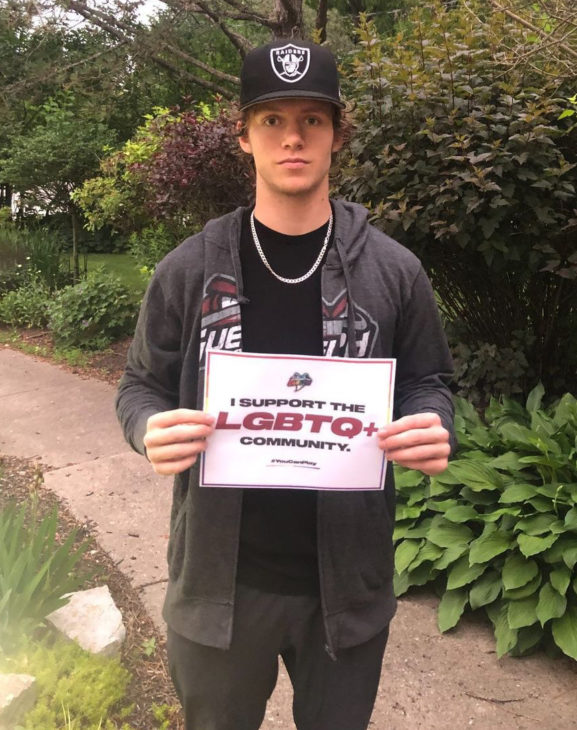
Nolan Forester
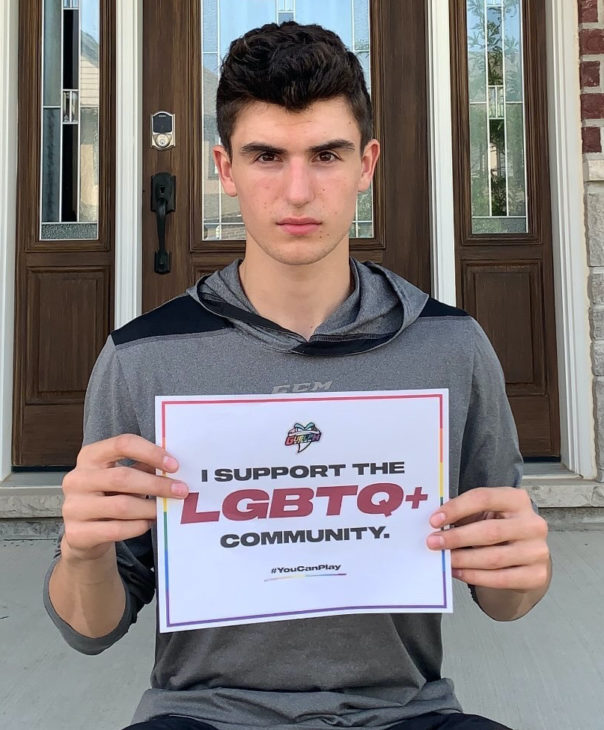
Marko Sikic
IV. What are Gender roles and stereotypes?
Our society has a set of ideas about how we expect people to dress, behave and present themselves. Gender roles in society mean how we’re expected to act, speak, dress, groom and conduct ourselves based upon our assigned sex at birth. Traditionally for example, girls and women are generally expected to dress typically feminine and be polite, accommodating and nurturing, whereas boys and men are generally expected to be strong, aggressive, and bold.
How do gender stereotypes affect people?
A stereotype is a widely accepted judgement or bias about a person or group—even though it’s overly simplified and not always accurate. Stereotypes about gender can cause unequal and unfair treatment, known as sexism.
There are four basic kinds of gender stereotypes:
- Personality traits—For example: Women are often expected to be nurturing and emotional, while men are usually expected to be self-confident and aggressive.
- Domestic behaviours—For example: Some people expect that women will take care of the children, cook and clean the home, while men take care of finances and do home repairs.
- Occupations—Some people are quick to assume that teachers and nurses are women, and that pilots, doctors, and engineers are men.
- Physical appearance—For example: Men and women are expected to dress and groom in ways that are stereotypical to their gender (men wearing pants and short hairstyles, women wearing dresses and make-up).
Gender stereotypes are harmful because they don’t allow people to fully express themselves and their emotions. For example, it’s harmful to masculine folks to feel that they’re not allowed to cry or express sensitive emotions. And it’s harmful to feminine folks to feel that they’re not allowed to be independent, smart or assertive. Breaking down gender stereotypes allows everyone to be their best selves.
How can I fight gender stereotypes?
There are ways to challenge stereotypes to help everyone—no matter their gender or gender identity—feel equal and valued as people. Here are some tips on how to fight gender stereotypes:
- Point it out—TV, advertisements, movies and the Internet are full of negative gender stereotypes and sometimes these stereotypes are hard for people to see unless they’re pointed out. So, be that person! Talk with friends and family members about the stereotypes you see and help others understand how sexism and gender stereotypes can be hurtful.
- Be a living example—Be a role model for your family and friends by respecting people regardless of their gender identity. Create a safe space for people to express themselves and their true qualities regardless of what society’s gender stereotypes and expectations are.
- Speak up—if someone is making sexist jokes and comments, whether online or in person, challenge them.
V. The Importance of Inclusion in Sports
Inclusion is pro-active behaviours, options and actions to make people from all backgrounds, ages, gender identities, and abilities feel welcome, respected and that they belong. Being inclusive is about following best practice for what sport should be so that everyone can get the most out of it.
Exclusion fuels the fear of difference. Inclusion, on the other hand, fuels acceptance. The understanding that comes with an inclusive mindset can lead to new ideas and positive change.
The impact of homophobia, biphobia and transphobia has real consequences on the physical and emotional health and wellbeing of an individual. Experiences of homophobia, biphobia and transphobia can increase the risk of self-harm, suicide, drug and alcohol use. It’s going to take all of us coming together to build a truly inclusive world where no one is left behind because of their age, disability, ethnicity, gender identity, or religion.
Facts:
- LGBTQ+ youth are 3x more likely to contemplate suicide than heterosexual youth.
- LGBTQ+ youth are 5x more likely to attempt suicide than heterosexual youth.
- ⅔ of LGBTQ+ youth leave sports before high school.
- Between 80-85% of people have witnessed or experienced homophobic behaviour or language in sport.
VI. Challenging Casual Homophobia
Homophobic language comes in many different forms. Language like “That’s so gay”, “No homo”, “Dyke”, and “Faggot” has become widespread in sporting communities, yet is rarely addressed by coaches and parents. The constant use of homophobic language can lead young people to think being gay is bad and that it’s acceptable to treat gay people less favourably. It is also a form of micro-aggression, causing the continued isolation, harassment, and negative mental health of LGBTQ+ athletes.
Homophobic language doesn’t just take place face-to-face; it is also prevalent online. The website NoHomophobes.com looks at the use of homophobic language on Twitter and found that:
- So gay: used on average over 10,000 times daily
- Faggot: used on average over 45,000 times daily
So why is this so important? After all, many would say that words are just words, and they are not always motivated by some sort of malicious intent, nor constitute deliberate bullying. But, when homophobic language goes unchallenged, it has a clear negative impact on young people’s sense of belonging and self-esteem.
“Language is not neutral; it holds power and has consequences. Demeaning language validates marginalization…it constructs and regulates our identities”. —Dr. Kristopher Wells, Director of the Institute for Sexual Minority Studies and Services at the University of Alberta (Federation for the Humanities and Social Sciences).
Homophobic language doesn’t just reinforce negative perceptions of gay people but it also leads to a general intolerance of being different. Where homophobic language is widespread young people, gay, straight or non-binary, feel less able to be themselves or take part in the activities they enjoy because they are worried about being negatively labelled.
Sources:
- You Can Play Project, 2020.
- Guelph Pride
- Out on the Shelf
- Queer Events
- Planned Parenthood
- OUTSaskatoon
- University of California LGBTQ+ Resource Center
Thank you for embarking on this journey with us to grow the game of hockey and striving towards creating a more inclusive environment.