




























































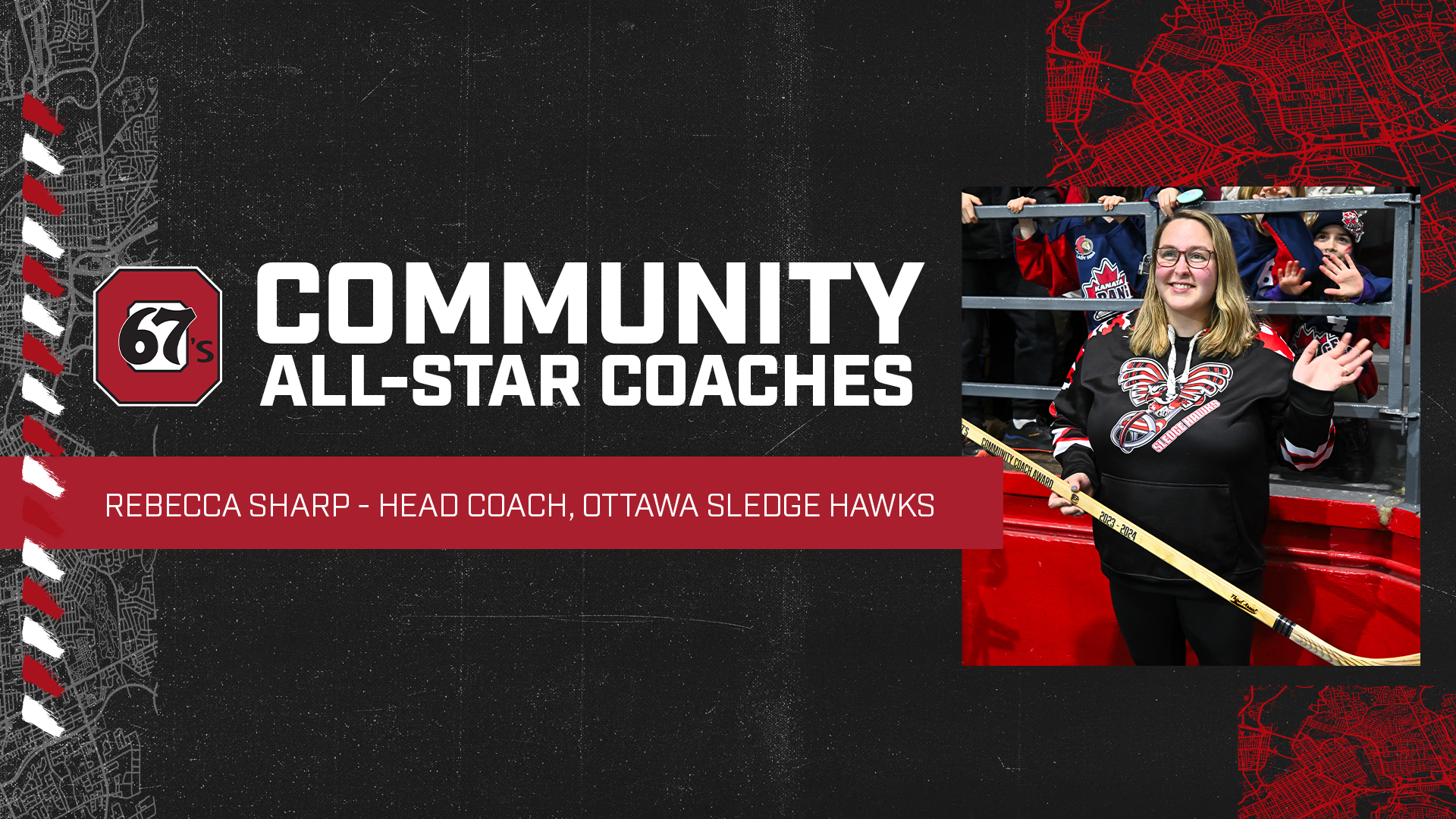
Rebecca Sharp selected as 67’s Community All-star Coaches Award
Rebecca Sharp believes that despite a lack of overall attention from the regular fan, sledge hockey is a foundational part of so many lives.
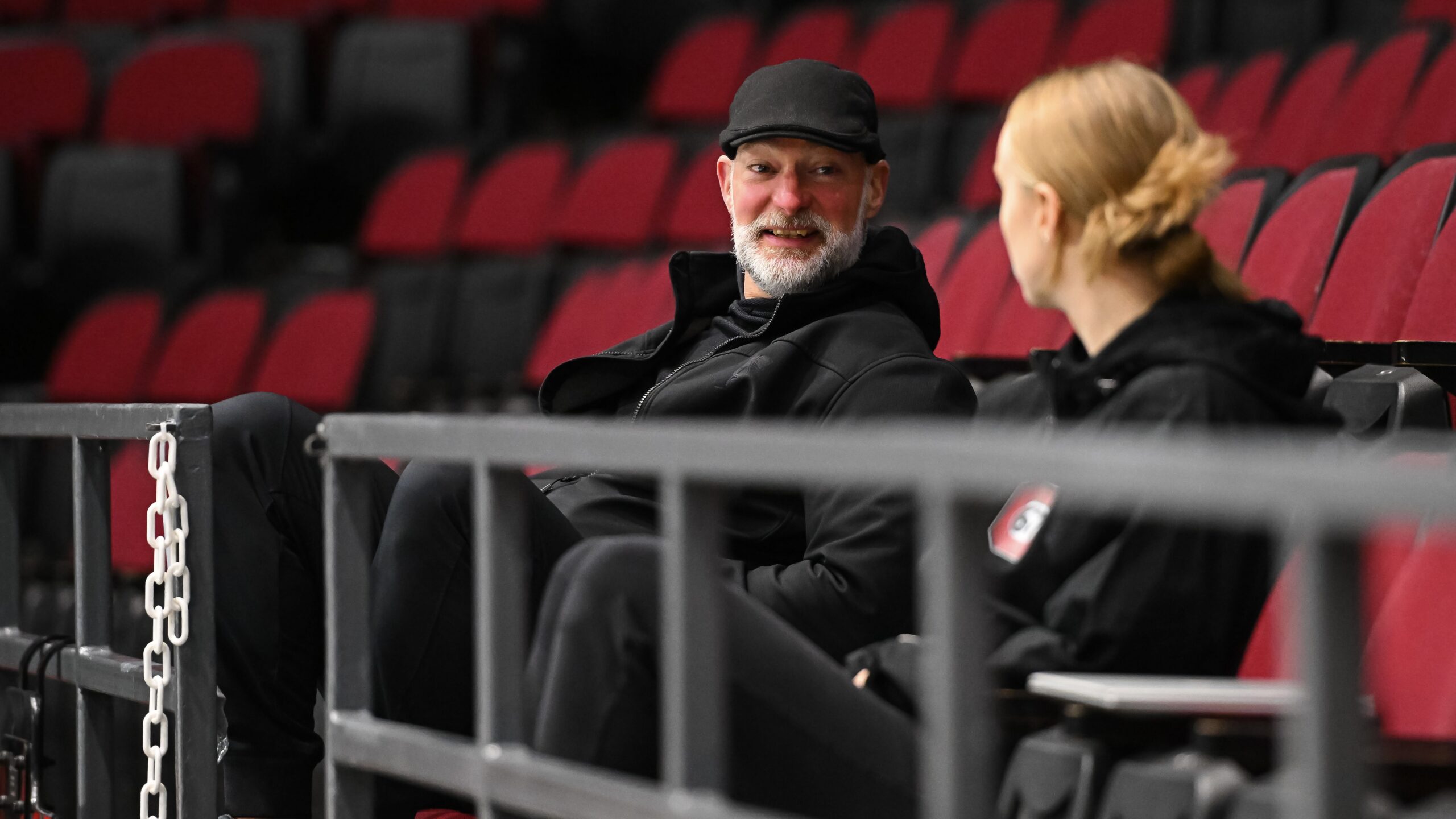
The Head Coach of the Ottawa Sledge Hawks, Sharp leads a diverse group, with both boys and girls ranging between ages four to 12 currently, but in her three years working with the organization, has seen children as young as three, and as old as 18 on the ice together.
Once a talented player in her own right, the move to coaching was made just a handful of years ago.
“I started playing sledge hockey about 10 years ago after I was injured and developed a disability,” Sharp said. “I got heavy into the sport and played at the national level for two years, but when I wasn’t able to play anymore, I transitioned my talents into coaching.”
Sharp didn’t take long to mull the option of coaching, taking the role in stride, looking to help kids in the same way she was helped.
“I have a really deep love for the sport,” she explained. “It’s a smaller organization, so you get to know the kids and families really easily. I just wanted to give back to the sport that has given me so much.”
Like many, Sharp played stand-up hockey before she was injured, and didn’t find sledge hockey until later in life. It’s a sport that offers a different opportunity to get back on the ice, and a different outlet to participate in a sport kids love, bringing a sense of normalcy to someone who may have experienced a life-changing event.
“I find that I was able to connect to those kids, and share with them what I went through,” Sharp said. “To see kids coming into the sport that recently endured injuries or had accidents, I want to connect with them and show them how much this sport can give you.”
Still, it can be difficult to teach kids so young.
There’s no professional league, and you’ll likely only see the sport on television every four years at the Paralympics, which has created a lack of exposure for sledge hockey among the general population.
“There’s a lack of knowledge around the sport,” Sharp said. “It’s something that’s getting better, but the kids don’t really know what they are getting themselves into. They get frustrated easily, and they don’t always know what’s going on. You have to get them to trust that they will learn, and that’s one of the biggest challenges for the younger kids.”
Navigating this – combined with coaching kids who are at drastically different stages of their development, both mentally, and physically – is something Sharp continues to work on.
“I try to remember that they are on the ice for a greater purpose,” Sharp said. “They are out there to learn, but it’s also about learning life skills, and keeping things that are happening outside of the sport present in their mind.”
Having gone through the process herself, Sharp says that there is nothing quite like seeing a child thrive on the ice, and although she’s supposed to be the one coaching them, she feels that sometimes, they are the ones teaching her.
“These kids have taught me so much about resiliency,” Sharp said. “No matter what is going on in life, this sport can teach you so much.”