













































Inside the PEP summer camp with four OHL alumni
For more than two decades, Power Edge Pro Hockey (PEP) has revolutionized the way players train. What began as a passion project by founder and president Joe Quinn and family, has grown into a globally recognized and patented system, now trusted by elite teams across the NHL, CHL, NCAA and beyond.
At the heart of PEP’s training is its signature Reactive Countering Training (R.C.T.) – a method that blends speed, coordination, and split-second decision-making under pressure. With specially designed on-ice and off-ice gear, the system challenges players to think fast and move even faster, mimicking real-game scenarios to sharpen hockey IQ and elevate performance.
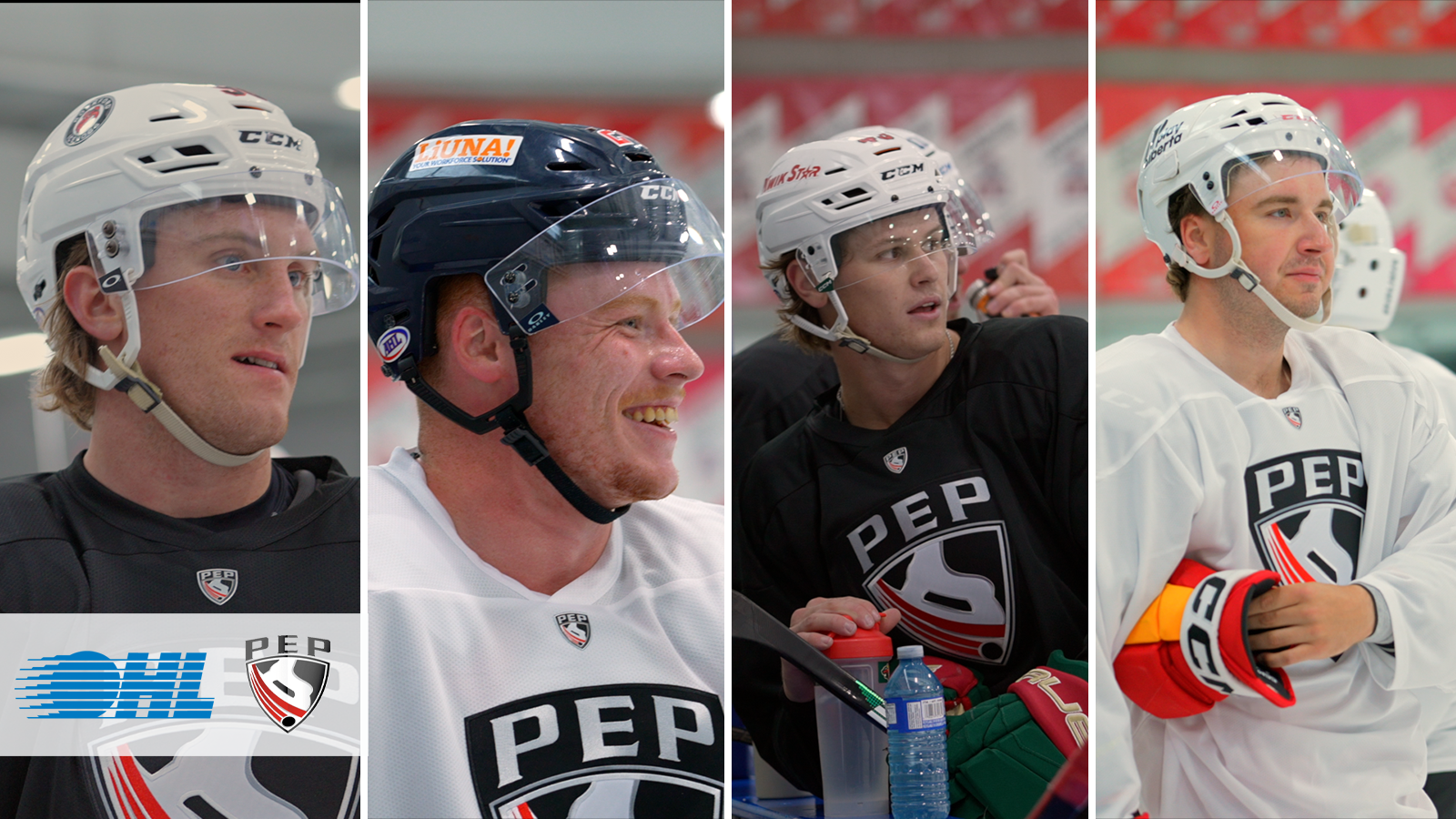
Now in its 25th year, PEP isn’t just about reps and drills, it’s also a place for old friends to reconnect on the ice. This year, we caught up with a handful of OHL alumni who returned to the summer staple program to fine-tune their craft and reconnect with familiar faces.
“It’s kind of an annual thing now,” said Hunter Haight, a Barrie Colts and Saginaw Spirit product. “It’s all about thinking and being fast in your decisions. You’re always reacting quickly and having to make moves in tight areas. I think their drills translate well into the game.”
For many, the camp is more than just a place to train, it’s a rare chance to check in with old teammates, junior hockey rivals, and fellow pros. “You get to skate with guys you played with or against, and just talk to them, see where they’re at in their pro careers,” said Ty Nelson, a former North Bay Battalion star. “During the season, it’s hard to keep in contact with everybody, so it’s nice to come here and just catch up.”
Paul Ludwinski, a Kingston Frontenacs alum, echoed that sentiment: “It’s always good to see guys you went toe-to-toe with in the OHL. Everyone’s pushing each other and just getting better out there. It’s fun.”
With more than 74 first-round NHL Draft picks trained since 2014, including 10 first-overall selections, PEP’s influence on the next generation of hockey talent is undeniable. And for those who’ve spent their developmental years in the OHL, it’s yet another tool in their belt as they chase the next level in their careers.
“I think they help us get comfortable with getting our hands and feet moving at the same time,” said Rory Kerins, a Soo Greyhounds graduate. “You’re put in uncomfortable positions, and that ultimately makes you more comfortable on the ice.”
With alumni like Connor McDavid among its earliest success stories, it’s clear that PEP’s impact reaches far beyond the ice surface, and for many OHL grads, it’s a place where development, brotherhood, and love for the game come full circle.



 Loading ...