































































Working Overtime
A Killer schedule
A quick look at Brian Kilrea’s recent schedule, now that he’s “retired.”
Nov. 23-27: Scouting a tournament in Whitby, Ont.
Monday: Hockey Hall of Fame dinner in Kingston
Wednesday: Scouting CCHL game between Cumberland and Ottawa Jr. Senators
Thursday: Day off
Friday: Watching Windsor Spitfires at Ottawa 67’s
Dec. 8-10: Scouting tournament in Syracuse area of central New York.
OTTAWA — The innovative guys who invented the RinkNet scouting software thought they had all the angles covered. They thought they’d come up with the ideal companion for all the hockey scouts who spend long, lonely winter nights on North America’s highways, often in terrible weather, each of them in pursuit of the next great player.
It certainly must work: 29 of 30 National Hockey League teams use it, as does nearly every major junior team in Canada. The system offers so many features — daily schedules, tournament planners, advance scouting info, game reports, players stats and rankings, depth charts, rosters, game-night lineups, draft results and on and on — that the guys who designed it say you can’t appreciate its value until you’ve used it. It can tell you where a team’s scouts have been and where they are going.
The only person the RinkNet technology can’t find is Brian Kilrea.
“If you look, you can see where every scout is,” says Ottawa 67’s scout Patty Higgins. “But it never shows where Killer is.”
The next edition of RinkNet might just need a special app for the 77-year-old hockey legend who announced his retirement as 67’s longtime general manager only a few months ago and has already taken up scouting on a full-time basis.
And he’s doing it with the same technology he’s always used: a pen and a program with the names and numbers of the players.
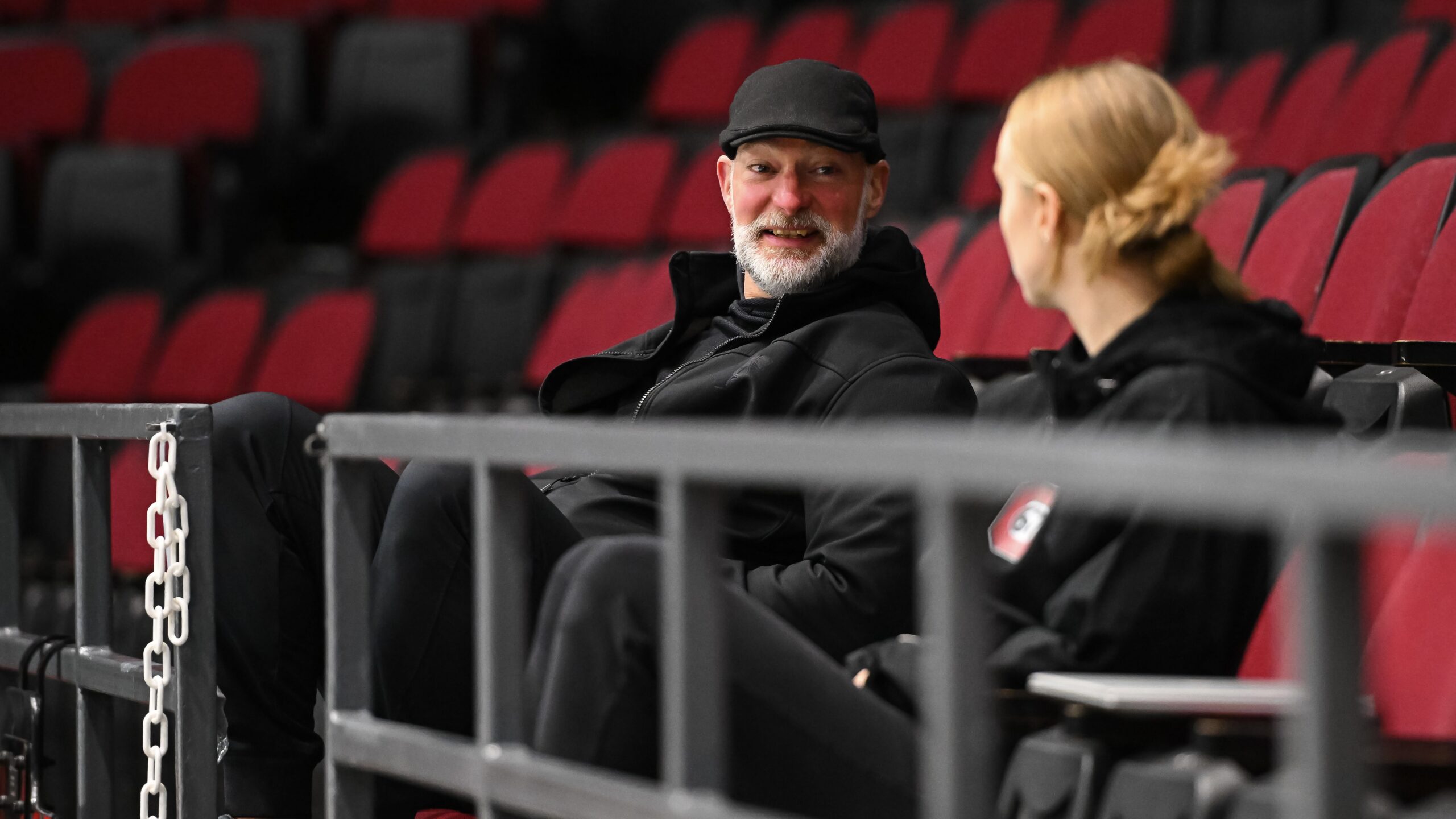
“I know where I am and where I’ve been,” Kilrea laughed this week while watching a Tier 2 junior game. “I don’t think you have to change a system that has worked for me for 30 years. I don’t need to write an article to know what I just saw.”
And when it comes time to meet to talk about what he’s seen in his arena travels, Kilrea also follows the traditional route: his memory.
“I don’t need a whole bunch of notes to work from,” he says matter-of-factly.
Unconventional as a player, and perhaps even more so as a coach and GM, why would any expect Kilrea-the-full time-scout to operate the same way as everyone else? After all, this is a guy who got a cellphone as a Christmas gift and tossed it in a dresser drawer.
And really, who actually expected Kilrea to stay away from the rink for long stretches after he spent more than six decades of his life devoted to the game?
He’s happy with his decision to leave the coaching and mentoring and player trading and administrative work to a younger guy, his hand-picked successor, Chris Byrne. He’s content to be known as the team’s “senior consultant.”
But there’s no way he’s not going to watch hockey. And not at home on television like other “retired” guys, but in the rinks where there’s always another generation of kids working on their dreams to play in the NHL.
So far this season, he’s been to more 150 games, and that’s not including a handful of assignments to scout Ontario Hockey League contests looking for potential trade candidates for the 67’s.
Last week, he was in Whitby watching 15 year olds. Next week, he’ll be in Syracuse and central New York. The week after, he heads back to the Toronto area.
“I’ll be leaving the house and say to Judy (his wife), ‘I’m headed to the office … or wherever,” says Kilrea.
“And she’ll come back with, ‘Oh I thought you were retired.’ ”
When he announced he was stepping down from his GM duties earlier this year, Kilrea knew he’d stay involved in the game and do a little scouting for the team. Just how much was unclear.
“I didn’t know how we’d do it,” he says. “I never thought I’d go to all the tournaments.”
But hardly a weekend goes by that he isn’t on the road somewhere watching kids play hockey.
And here’s what else hasn’t changed: Kilrea’s scouting methodology, which is strictly old school.
So, while other scouts are constantly on their BlackBerrys or laptops, Kilrea scribbles on his program, making notes. Then at the end of a weekend tournament, he hands the others in his scouting party the names of the players he liked, maybe with a Top 20 list.
Sometimes, he might get in touch with Chris Hamilton, the 67’s hockey operations master back in Ottawa, with his views on players that surprised him at a tournament, or who have been discussed before.
“Usually, I’ll say, ‘I’ve seen this guy or that and I’ll go see him again,’” he says.
In large part, the appeal of scouting for Kilrea is the chance spend time with old friends, especially the trio — Higgins, Bert O’Brien and Joe Rowley — that often heads off together on weekend road trips.
O’Brien, in his early 60s, is nicely retired from his day job with Mechron Engineering and goes back more than 40 years with Kilrea. Higgins, too, has just retired from the LCBO and is in his mid-50s. He’s worked part-time for the 67’s for 20 years and has known Kilrea since he was a teenager. Once they get to where they’re going, they are generally joined by 67’s head scout Joe Rowley, a retired school teacher from Oshawa.
A typical road trip starts in Ottawa South where Kilrea picks up O’Brien and immediately passes off the driving duties before the pair collects Higgins on the way out of the city.
Higgins jokes that the men split the driving — that is, he and O’Brien split it.
Kilrea’s seat of choice is just as it was for decades on the 67’s team bus: front seat, passenger side. Once on the road, it’s not long before a cigar gets lit and the stories start.
Usually about halfway down Highway 401 toward Toronto, Kilrea will ask if anyone is hungry
“That means he’s hungry,” Higgins says, “and that it’s time for all of us to eat.”
The menu is always the same, salmon sandwiches (carefully wrapped in cellophane), a banana and a bottle of water.
“We’re never sure who made them,” says Higgins. “We think it’s Judy. But he always says, nope, that he made them himself ‘this morning.’ So maybe he does.”
The trio’s most recent road destination was Whitby, the second good chance to see the best minor midgets (players born in 1996) who will be eligible for the OHL draft next May.
They pulled into the rink about 3:30 p.m. and watched games until 11 p.m. before heading out for a bite to eat. On that night, they were watching SportsCentre on a restaurant TV when the news came on about the death of legendary Canadian Football League receiver Hal Patterson.
“So we’re watching all the old highlights of this 79-year-old who just died and I got thinking, ‘Here I am about to spend the next four days with a 77 year old,’” says Higgins. “That’s just it. (Kilrea) doesn’t seem to have a clue he’s 77.”
Before turning in, the trio made plans to see a game at 7:30 the next morning and all asked for 6:30 wake-up calls.
“We come downstairs for breakfast and there he is,” says Higgins. “He’s the first one down there, singing and ready to go.”
And Kilrea stayed right through until 11 p.m. again. Day 3 was the same.
Other scouts say when he’s watching a game, Kilrea has a set of eyes like no other. His ability to spot talent is legendary.
So is his impatience. If he doesn’t see a player he likes in the opening period of a game, he hoofs off to another rink. He’s willing to put in 10- and 12-hour days, sometimes enduring awful hockey, if there is a player or two worth watching.
And he’s willing to listen to his fellow scouts, even if he always doesn’t agree.
“I still get pissed off if we take a guy I didn’t like,” Kilrea says. “But I know Joe calls the shots.”
Even so, if he is adamant about a player, he makes sure “they will hear me.”
Kilrea’s travels around Ontario aren’t just about bonding with other scouts and hockey people. Almost without exception, he can’t walk into a rink anywhere in Ontario without being recognized.
Byrne recalls pulling into a gas station near Barrie with Kilrea and while he was out of the car filling up the tank a man at the next pump asked if that was Kilrea sitting in the front seat. When he said it was, the man told him to say hello because one of his buddies had played for Kilrea 10 years before.
“On the road, there’s always somebody who knows him,” says Byrne.
Scouts tend to like to sit high in the end seats of arenas, something that’s not always possible in the small minor hockey rinks where they spend so much time. So Kilrea usually chooses a far corner as the next best spot for his “office.”
And still people manage to find him.
“There’s always a family who wants to just say hi,” says Higgins. “Or a coach wondering if he would just come into the dressing room for a couple of minutes to say hi to the kids. Or a mom at Kelsey’s. Or a lady at the hotel.
“People can’t help themselves. The man is a living legend.”